Case study · decided file
The Committee Approves Two Narrow Lots in Mimico
360 Melrose St · consent to sever into two undersized lots · filed 2024, approved January 2025
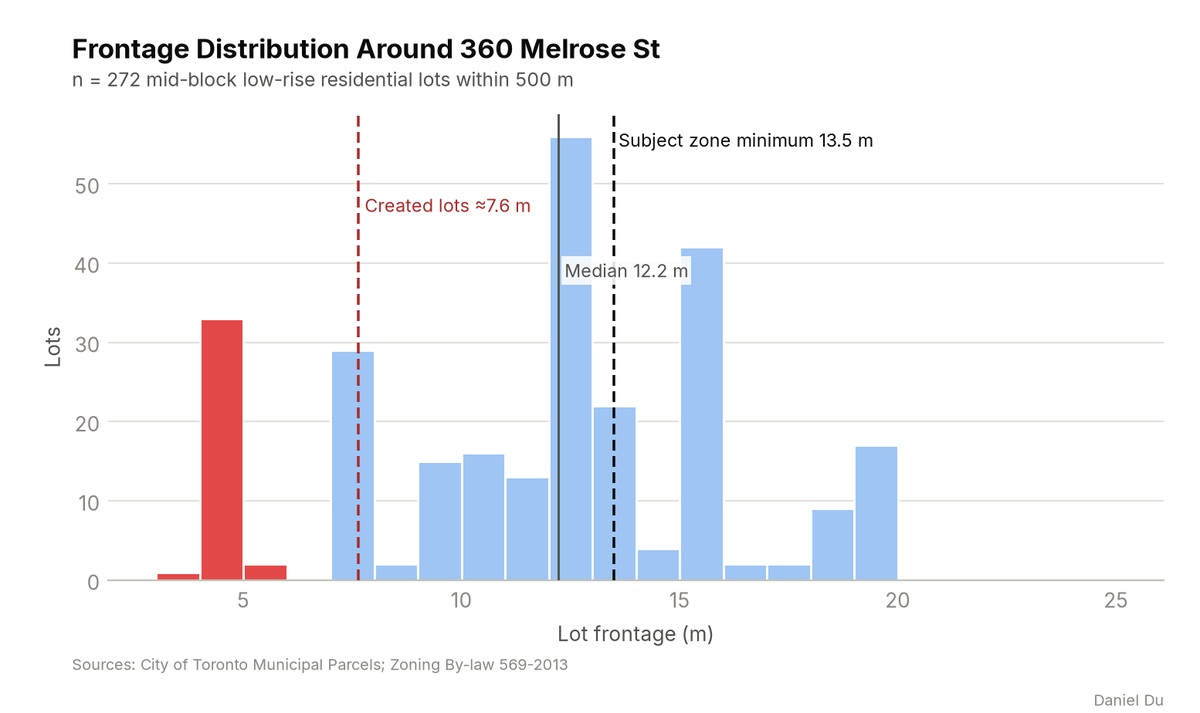
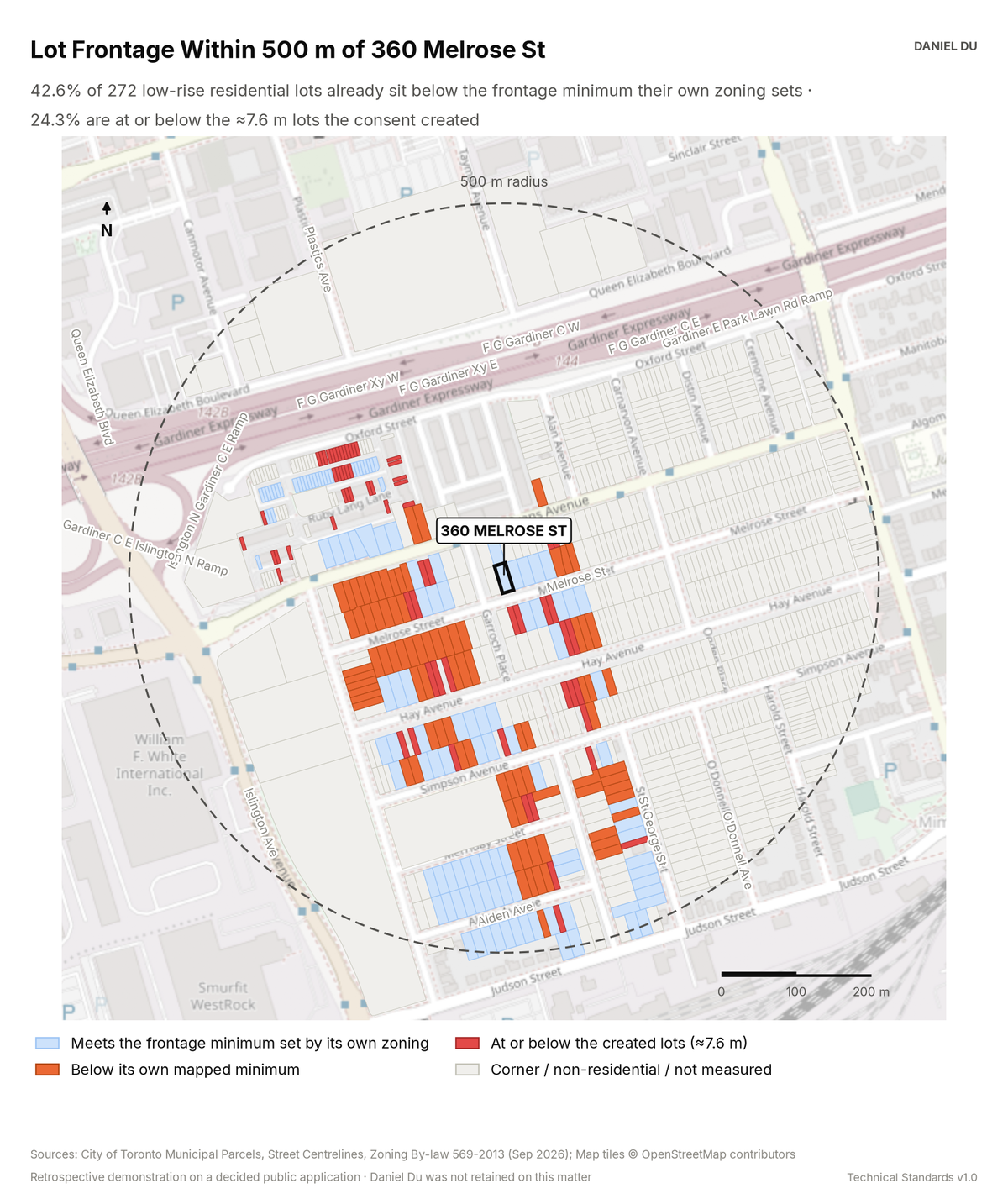
42.6% of nearby lots sit below the frontage minimum that their own zoning sets. 24.3% are at or below the width that the consent created.
This is a retrospective demonstration study. The Committee of Adjustment already decided this application, and the file is a public record. Daniel Du was not retained on the matter. We prepared this analysis after the decision, as a work sample. It states no planning opinion.
The package includes the report (PDF), print-ready map and chart exhibits (PNG), the full data table with a data dictionary (CSV), a methods note (TXT), the interactive map (HTML).
The interactive map is one HTML file. Open it from disk in any browser. Each threshold has a slider and an exact-value box, and the counts and headline update as you move them. You can change the colours, outlines and fill, switch to a colour gradient, or add a satellite, topographic or building footprint background. Click any mapped feature to see its record. The map works offline. The satellite and topographic backgrounds need an internet connection. The package also includes this same file.
How it is measured
We measure every low-rise residential lot within 500 m from parcel geometry in EPSG:2952. Frontage is the street-facing edge of the lot, projected along the street. Mapped standards vary across Mimico. For that reason we compare each lot with the 'f' value of its own zone label, not with one blanket minimum. The same method was used in the delivered Windermere study. We exclude corner lots from the statistics.
We estimate the width of each created lot as half the measured frontage of the subject parcel. The decision record describes 'two undersized residential lots' but does not publish the certified dimensions. We state this approximation openly.
Consent precedent comes from Committee of Adjustment records. We geolocate each record to the parcel fabric. The open record is thin before 2015, so the precedent counts are conservative.